Hard water has a funny way of becoming part of the background. At first, you notice the white marks on the faucet or the film left on the shower glass. Then the dishes seem to come out of the dishwasher with spots, soap doesn’t lather quite the way it should, and the kettle starts collecting a crusty layer inside. Eventually, you stop noticing each individual problem and simply think, “That’s just how our water is.”
It doesn’t have to be.
Hard water is common in many areas, and while it isn’t usually considered a health concern by itself, it can be a nuisance for plumbing, appliances, cleaning and general household comfort. Understanding what causes hardness — and how treatment works — makes it much easier to decide whether a softener is worth considering.
What Actually Makes Water Hard?
Water becomes hard mainly because it picks up naturally occurring minerals as it travels through soil and rock. Calcium and magnesium are the two minerals most commonly associated with hardness.
The concentration can vary considerably from one location to another. Well water, in particular, may have substantial mineral content depending on local geology.
You may not notice anything unusual when you first fill a glass. Hard water can look completely clear. Its effects tend to show up elsewhere: scale around fixtures, deposits inside appliances, difficulty rinsing soap and a general feeling that cleaning takes more effort than it should.
That’s why hardness is often described as a “hidden” water problem. You don’t always see the minerals in the water itself, but you can certainly see what they leave behind.
Why Hard Water Becomes a Household Nuisance
A little mineral buildup may not sound like a major concern. Over months and years, though, the story can change.
Scale can accumulate on showerheads, faucet aerators and other plumbing fixtures. Heating appliances are particularly vulnerable to mineral deposits because heat can encourage scale formation.
Dishwashers and water heaters may also experience buildup over time. That doesn’t mean hard water automatically ruins an appliance, of course. Appliance design, water hardness, usage and maintenance all matter. Still, reducing unnecessary mineral deposits can be a sensible part of protecting equipment.
Then there’s the everyday cleaning problem. Soap and hard water can react to form residue, which may leave surfaces looking dull or make bathrooms feel like they’re never quite clean.
Where Water Softeners Come In
For households dealing with significant hardness, water softener systems offer a targeted way to reduce calcium and magnesium from the water supply.
Most conventional softeners use a process called ion exchange. In simple terms, water passes through a tank containing resin beads. The beads hold positively charged sodium or potassium ions, and they exchange those ions for calcium and magnesium as the water passes through.
The treated water then has much lower hardness.
It sounds technical, but the practical effect is straightforward: less of the mineral buildup associated with hard water.
Understanding Ion Exchange Technology
The heart of many traditional softeners is ion exchange technology. It has been used in water treatment for decades because the basic process is effective and relatively well understood.
Over time, the resin becomes loaded with calcium and magnesium. It then needs to be regenerated. During regeneration, a salt-based brine solution is typically used to restore the resin’s ability to exchange ions.
Modern softeners can automate this process. Depending on the model, regeneration may be controlled by a timer, water usage or other settings.
That distinction matters because regeneration affects salt and water consumption. A properly configured system should be matched to the household rather than simply regenerating on an arbitrary schedule.
Is Hard Water Treatment Necessary?
Whether you need hard water treatment depends on the severity of the problem and what you want to accomplish.
Some homeowners tolerate moderately hard water without much trouble. Others become frustrated by constant scale, spots and cleaning issues.
Testing is the best way to move beyond guesswork. A water-quality professional can measure hardness and help determine whether treatment makes practical sense.
If hardness is high and it’s causing noticeable problems, treatment can potentially improve the day-to-day experience of using water throughout the home.
What About Salt-Free Systems?
Salt-free water conditioners are often discussed alongside traditional softeners, but they aren’t exactly the same thing.
Many salt-free systems are designed to condition water in ways that reduce the tendency of minerals to form scale. They generally don’t remove calcium and magnesium in the same manner as an ion-exchange softener.
That’s an important distinction.
If your primary objective is true softening, a conventional softener may be more appropriate. If your main concern is scale control and you don’t want a salt-based system, a conditioning approach may be worth discussing.
The right choice depends on the water and your priorities.
Sizing Matters
A softener that’s too small may regenerate frequently and struggle to keep up with demand. One that’s dramatically oversized can be unnecessarily expensive and may not operate as efficiently as it could.
Household size, water hardness and daily water consumption all help determine appropriate capacity.
A family of five with several bathrooms, for example, may have very different requirements from someone living alone in a smaller property.
It’s tempting to simply choose the biggest model available. Bigger isn’t automatically better, though. Proper sizing usually makes more sense.
Maintenance Is Part of Ownership
Like any home equipment, a softener needs attention.
Salt levels should be checked regularly when the system uses salt. The brine tank may need cleaning occasionally, and settings should be reviewed if household water use changes significantly.
If the water begins behaving differently — perhaps scale returns suddenly or the system seems to regenerate unusually often — don’t just assume that’s normal.
A filter, valve, injector, resin bed or control setting could be involved. Professional inspection can identify the cause before a small issue becomes a larger one.
Think About the Whole Home
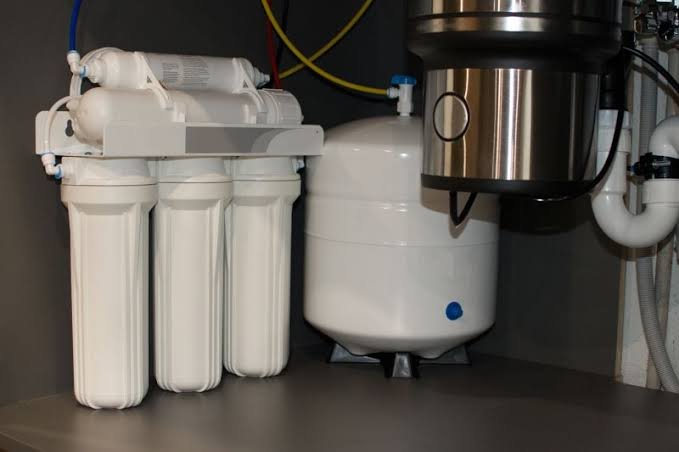
One of the appealing things about treating hardness at the point where water enters the home is that the benefits can extend beyond drinking water.
Showers, bathroom fixtures, laundry and water-using appliances all receive treated water when the system is installed on the main supply.
That doesn’t mean every home needs whole-house treatment. It simply means the scope of the problem should guide the scope of the solution.
If hard water is affecting almost everything, treating one kitchen faucet won’t address the underlying issue.
A More Comfortable Relationship With Your Water
Hard water isn’t necessarily a disaster. For many households, it’s simply an ongoing inconvenience that becomes increasingly annoying over time.
A properly selected softener can reduce hardness minerals and help limit some of the scale and residue associated with them. But choosing the right system starts with testing, sensible sizing and an understanding of what the equipment actually does.
Don’t buy based on promises alone. Look at your water quality, household demand, maintenance expectations and long-term costs.
At the end of the day, the real benefit isn’t a piece of equipment sitting quietly in a utility room. It’s the little improvements you notice afterward — fewer stubborn spots, easier cleaning, fixtures that stay cleaner and appliances that don’t have to deal with quite as much mineral buildup.
Those aren’t flashy changes. They’re everyday ones. And sometimes, those are the improvements that matter most.