There’s something comforting about turning on the kitchen faucet and knowing you can fill a glass without giving it much thought. Water is supposed to be simple. You drink it, cook with it, make coffee with it, and move on.
But sometimes the water has a strange taste. Maybe there’s a faint odor, mineral residue around the faucet, or simply a feeling that the water could be better. That’s when many homeowners start looking at filtration and purification options.
The challenge is figuring out what you actually need. There are plenty of systems on the market, and the terminology can get confusing quickly. A thoughtful choice starts with understanding your water, your household habits, and what you want the treatment system to accomplish.
Start With the Water You Have
Before choosing equipment, take a close look at your water source. Municipal water and private well water can have very different characteristics, and local conditions can make one property quite different from another.
Taste and odor are useful clues, but they’re not a complete diagnosis. Water can look perfectly clear while containing dissolved minerals or other substances that aren’t visible.
A water test can provide a more useful starting point. Depending on the test, it may evaluate hardness, pH, metals, disinfectants, bacteria, and other characteristics.
Once you know what’s present, you’re no longer shopping blindly.
Why Reverse Osmosis Gets So Much Attention
For homeowners who want highly treated water at the kitchen faucet, reverse osmosis is one technology worth considering.
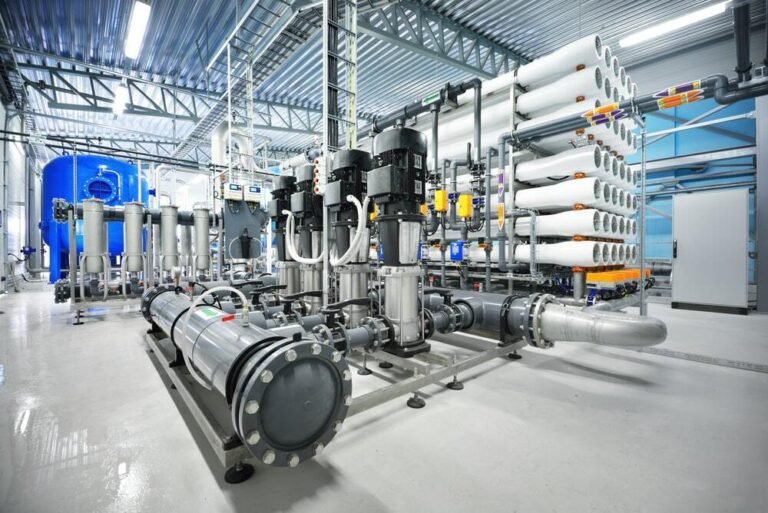
The process uses pressure to move water through a semipermeable membrane. The membrane allows water molecules to pass while reducing many dissolved substances and impurities.
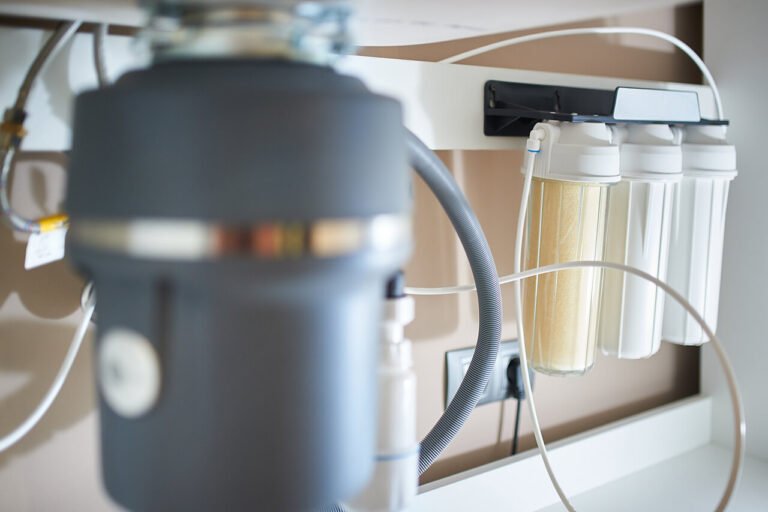
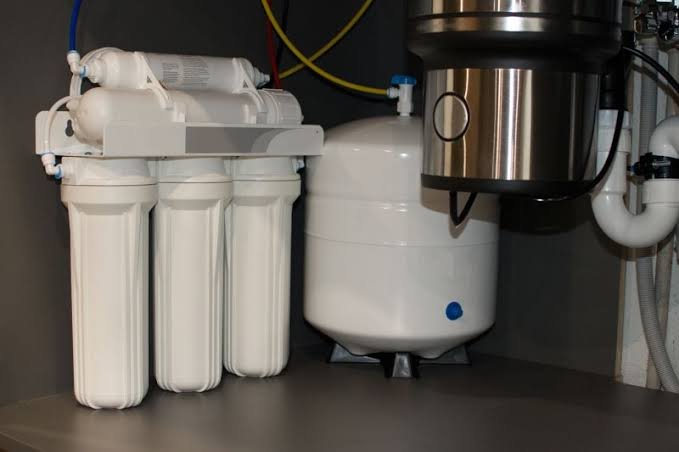
Reverse osmosis systems are commonly installed at a point of use, particularly where drinking and cooking water are the priority. Some systems include several stages of prefiltration and post-treatment to support membrane performance and improve taste.
That said, reverse osmosis isn’t automatically the right answer for every home. If your main problem is hardness throughout the house, for example, a water softener addresses a different issue.
The best technology is the one that fits the water.
Drinking Water Systems Should Match Your Routine
A treatment system needs to work with real life, not just look impressive on a product specification sheet.
Modern drinking water systems can range from simple carbon filters to more advanced multi-stage purification setups. Some sit beneath the kitchen counter, while others connect directly to a dedicated drinking-water faucet.
Think about how your household actually uses water. Do you mostly want better-tasting water for drinking? Do you cook frequently? Do several people fill reusable bottles throughout the day?
These questions matter because they influence capacity, flow rate, filter life, and the type of system that makes sense.
A family that goes through gallons of drinking water every day may have very different needs from someone who mainly wants an occasional glass at the kitchen sink.
Taste Matters, But It Isn’t Everything
Taste is often what motivates people to seek treatment in the first place.
Water can have a chlorine-like flavor, a metallic note, or an earthy taste. Sometimes the issue comes from the source water; sometimes it can be influenced by plumbing or treatment methods.
Activated carbon is commonly used to reduce certain tastes and odors, while other technologies target dissolved substances more broadly.
It’s worth remembering, though, that pleasant-tasting water isn’t automatically problem-free. Taste is one part of the picture, not the entire picture.
Consider What Purified Water Means to You
The phrase purified drinking water can sound straightforward, but treatment goals vary.
For one household, purification may simply mean reducing an unpleasant taste. For another, it may mean reducing specific dissolved substances identified through testing.
This is why product labels shouldn’t be the only thing guiding a purchase. Look at what the system is actually certified or designed to reduce, how it performs under expected conditions, and what maintenance it requires.
If you’re concerned about a particular contaminant, choose a system specifically designed and appropriately certified for that concern rather than assuming every filter handles everything.
Don’t Ignore Pre-Filtration
Membrane-based systems such as reverse osmosis often work better when the incoming water is properly conditioned.
Sediment, chlorine, and other substances can affect components depending on the system design. Prefilters may capture particles or reduce certain chemicals before water reaches the membrane.
This isn’t necessarily complicated. Many residential systems are already designed with multiple treatment stages.
The important thing is to understand what each stage does. A system with three filters isn’t automatically better than one with two. Each component should have a purpose.
Filter Replacement Is Part of the Deal
One of the least exciting parts of owning a drinking-water system is maintenance.
Filters don’t last forever. Their useful life depends on water quality, household consumption, filter capacity, and the manufacturer’s recommendations.
Waiting until the water tastes strange isn’t a great maintenance strategy. A clogged filter can also affect flow and system performance.
Keep track of replacement dates. If your household uses more water than average, you may need to replace filters more frequently than a generic schedule suggests.
It sounds mundane, but regular maintenance is what keeps a good system good.
What About Water Waste?
Some reverse osmosis systems produce wastewater as part of their operation. The amount can vary depending on system design, membrane condition, water pressure, and other factors.
If efficiency is important to you, ask about the system’s recovery rate and wastewater production before buying.
Newer, more efficient designs may use water differently from older systems, so it’s worth comparing specifications rather than assuming all reverse osmosis equipment performs the same way.
Small differences in efficiency can matter over years of daily use.
Installation and Placement Matter
A drinking-water system needs enough room for filters, connections, and future maintenance.
Under-sink cabinets can become crowded quickly, particularly when there’s already a garbage disposal, plumbing lines, or storage taking up space.
Think about accessibility before installation. If replacing a filter requires removing half the contents of the cabinet, maintenance may become something you keep postponing.
A system that’s easy to reach is much easier to maintain.
Don’t Buy Based on a Neighbor’s Setup
Recommendations from friends and neighbors can be helpful, but water treatment is unusually personal.
Your neighbor may have different source water, different plumbing, different household demand, or completely different treatment goals.
Their system could work beautifully for them and be unnecessary for you.
Use recommendations as a starting point, not as proof that you need the same equipment.
The Right Treatment Doesn’t Need to Be Complicated
There’s no shortage of impressive-looking water treatment technology. Some systems have multiple stages, smart monitoring, digital controls, and a long list of features.
Those things can be useful. But technology for its own sake isn’t the goal.
Start with the water. Identify what concerns you. Decide whether you want to improve taste, reduce specific substances, or provide a more consistently treated source for drinking and cooking.
Then choose a system that meets those needs without making everyday life harder.
Better Drinking Water Starts With a Clear Plan
Good drinking water isn’t necessarily about finding the most powerful system available. It’s about finding a system that makes sense for your home’s water and your daily habits.
Test when appropriate. Understand the treatment technology. Check performance claims and certifications. Consider maintenance and operating costs, too.
Whether you choose carbon filtration, reverse osmosis, or another treatment method, the important thing is knowing why you chose it.
After all, the best water treatment system is rarely the one with the most buttons or the longest feature list.
It’s the one that quietly does its job every day — giving you water you feel comfortable drinking, cooking with, and serving to the people around your table.