There are few things more ordinary than filling a glass from the kitchen faucet. You probably don’t stop to think about where the water came from, what it picked up along the way, or what is left in it by the time it reaches your home.
Then one day the water tastes different. Maybe there’s a faint mineral flavor, an odd aftertaste, or simply something you can’t quite put your finger on. That’s often when people start looking into filtration.
Reverse osmosis gets mentioned pretty quickly. It has become a popular option for households that want an additional level of treatment for water used primarily for drinking and cooking. But like any technology, it works best when you understand what it does — and what it doesn’t.
What Is Reverse Osmosis?
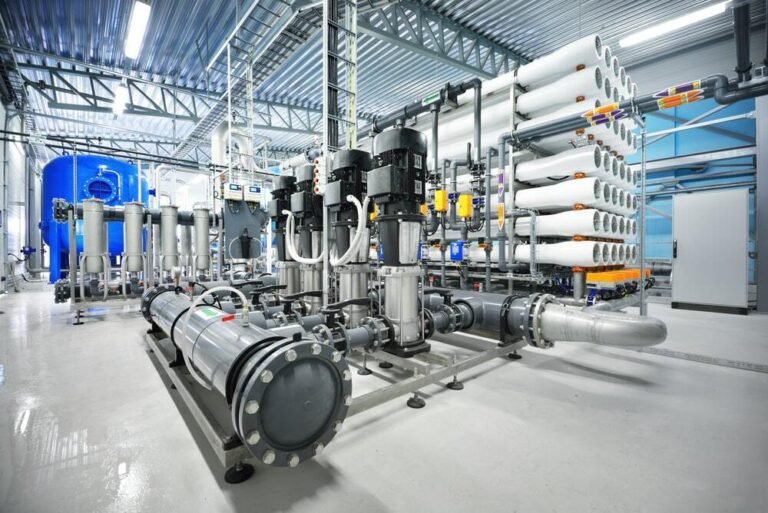
Reverse osmosis is a filtration process that uses pressure to push water through a semipermeable membrane. The membrane allows water molecules to pass while reducing many dissolved substances and other impurities.
The process sounds complicated, but the basic idea is fairly simple: water moves through a very fine barrier, while many unwanted substances are separated from the treated water.
A typical system may include several stages before and after the membrane. Sediment filtration can remove larger particles, while carbon filtration may address certain tastes, odors, and chemicals. The reverse osmosis membrane then performs the main separation, followed by additional treatment in some systems.
The result is water that can have a noticeably different taste and character.
Why People Choose RO for the Kitchen
For many homeowners, the attraction is straightforward. They want water they enjoy drinking.
RO drinking water can be appealing when homeowners want to reduce a range of dissolved substances from water used for drinking and food preparation. It can also provide a consistent source of treated water without relying on bottled water for everyday use.
There’s a practical convenience here. You fill a glass, boil water for pasta, make coffee, or prepare baby food using the same treated source.
Of course, the actual benefits depend on the starting water quality and the specific system. Reverse osmosis isn’t automatically necessary just because a home has filtered water available.
Testing can help determine whether it makes sense.
Reverse Osmosis Isn’t Just One Filter
One common misconception is that an RO system is simply a single membrane sitting underneath the sink.
In reality, many reverse osmosis systems use multiple stages, with each component doing a particular job.
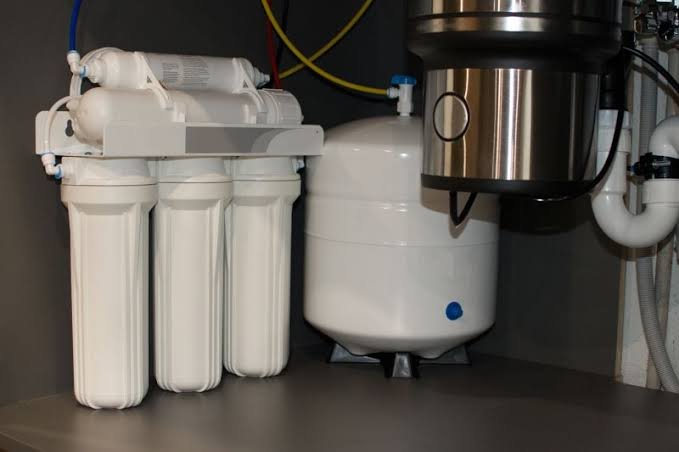
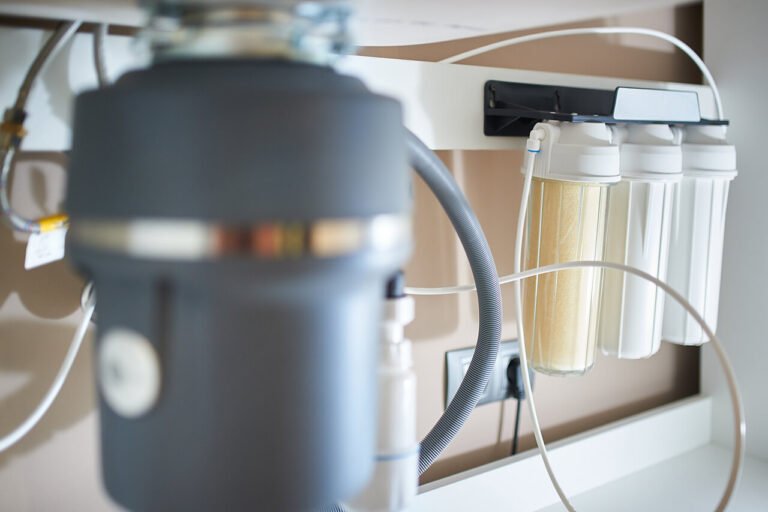
A sediment filter may protect the system from particles. Carbon filters can help protect the membrane and improve taste and odor. The RO membrane handles the primary separation of many dissolved substances. A post-filter may then polish the treated water before it reaches the faucet.
Some systems also include storage tanks, pumps, remineralization stages, or electronic monitoring.
The exact configuration depends on the system and the water being treated. More stages aren’t automatically better, either. What matters is whether the design makes sense for the specific water-quality concerns.
Start With Testing Instead of Guessing
It’s tempting to buy an RO system after reading a few product descriptions online. But water isn’t identical from one house to the next.
Municipal water, private well water, rainwater collection systems, and other sources can have very different characteristics.
Testing can provide useful information about dissolved minerals, hardness, chlorine, sediment, pH, and other water-quality factors. The results can help determine whether reverse osmosis is appropriate and whether prefiltration or another treatment method should be included.
This step can also prevent homeowners from expecting one system to solve every problem.
If the main issue is hard water throughout the house, for example, an RO system under the kitchen sink may improve drinking water but won’t soften the shower water or protect the entire plumbing system from hardness.
That’s an important distinction.
What Happens to the Water That Isn’t Treated?
Reverse osmosis typically produces a stream of treated water and another stream that carries away concentrated substances.
That means some water is discharged during the filtration process. The exact ratio varies considerably depending on system design, water pressure, membrane condition, and technology.
Modern high-efficiency systems can be designed to reduce water waste compared with older RO equipment, so it’s worth asking about efficiency when comparing options.
If water conservation is a major concern in your household, discuss the expected recovery rate with the installer rather than relying solely on a marketing claim.
Small technical details can make a surprisingly large difference over years of use.
Maintenance Is Part of the Deal
An RO system is not a set-it-and-forget-it appliance.
Filters need to be replaced at appropriate intervals. The membrane has a useful service life and may eventually need replacement. Storage tanks and other components can also require attention.
The timing depends on water quality, usage, system design, and manufacturer recommendations.
Neglecting maintenance can affect taste, flow rate and treatment performance. In some cases, a poorly maintained system may become a source of frustration rather than a solution.
The good news is that routine maintenance is usually manageable. Keep a record of filter changes, pay attention to changes in taste or flow, and arrange service when needed.
Don’t Expect RO to Solve Every Water Problem
Reverse osmosis is powerful, but it’s not magic.
It isn’t necessarily the best choice for removing every contaminant or correcting every water-quality issue. Some concerns may be better addressed through sediment filtration, carbon treatment, softening, ultraviolet disinfection, or another specialized technology.
And if you want treated water throughout the entire house, an under-sink RO system isn’t designed for that job.
This is why a complete water assessment is so useful. Instead of asking, “Which is the best filter?” it makes more sense to ask, “What does my water need?”
That shift in thinking usually leads to a better decision.
Taste Matters More Than People Admit
Technical performance is important, but taste shouldn’t be dismissed.
Water can meet appropriate quality requirements and still have a flavor you don’t enjoy. Chlorine, minerals, dissolved substances and even the condition of household plumbing can influence taste.
For people who drink more water when it tastes better, that can be a meaningful benefit.
Drinking water is something we consume every day, so having a convenient source that tastes clean and pleasant can make healthy habits easier to maintain.
Of course, water preferences are personal. What tastes perfect to one person may seem flat or unusual to another.
Think About Where You Want Treatment
One of the biggest decisions is whether you want treatment at a single faucet or throughout the property.
For many households, treating kitchen water is enough. Drinking, cooking and coffee-making are the main priorities, so an under-sink system offers targeted treatment without modifying the entire home’s water supply.
Other homes may need broader treatment because of hardness, sediment, iron, odor, or other concerns affecting multiple fixtures.
There is no prize for treating more water than necessary.
Targeted treatment can sometimes be the simpler and more economical choice.
Make the Decision Based on Your Water
Reverse osmosis has earned its popularity for good reasons. It can provide highly treated water for drinking and cooking, and modern systems offer a range of configurations designed around different household needs.
But the best RO system isn’t necessarily the one with the longest list of features or the highest price.
Start with the water. Test it. Understand the results. Think about how your household uses water and what you actually want to improve.
Then choose a system that fits those needs, have it installed correctly, and keep up with maintenance.
Good water treatment isn’t about chasing technology for its own sake. It’s about finding a practical solution that works quietly in the background — so when you reach for that glass of water, you don’t have to think twice about it.