There’s something oddly personal about the water you drink every day. You notice it when the morning coffee tastes a little different, when ice cubes pick up an unpleasant flavor, or when you take a sip straight from the tap and hesitate for half a second.
Water can look perfectly clear and still have characteristics that affect taste, odor, or overall quality. That doesn’t mean every home needs an elaborate treatment setup. It does mean that understanding the options can help you make a smarter decision.
One technology that has become increasingly common for household drinking water is reverse osmosis. It isn’t a magic wand, and it isn’t necessary for everyone, but when properly selected and maintained, it can be a useful part of a home’s water-treatment strategy.
What Reverse Osmosis Actually Does
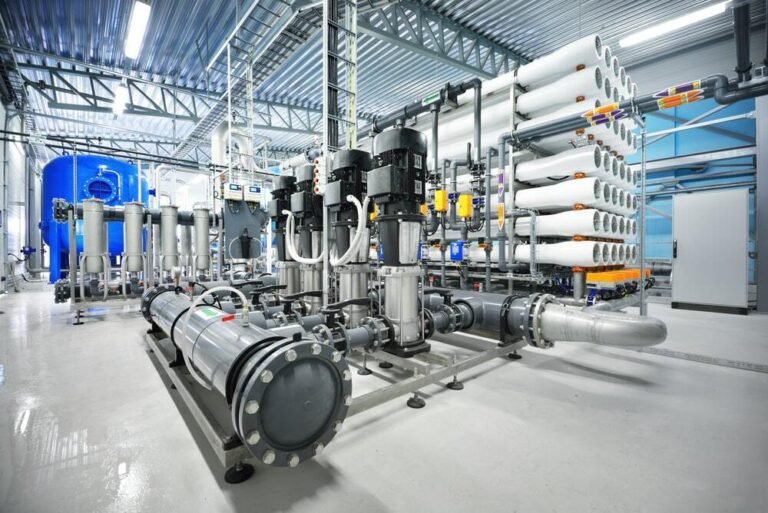
Reverse osmosis works by pushing water through a semipermeable membrane. The membrane allows water molecules to pass while reducing many dissolved substances and contaminants.
The process is different from ordinary particle filtration. A basic sediment filter, for example, is mainly designed to capture physical particles. Reverse osmosis focuses heavily on substances dissolved in the water.
That’s an important distinction. If you’re trying to solve a specific water-quality issue, the treatment technology needs to match the problem.
Why Homeowners Consider It
People choose reverse osmosis for different reasons.
Some are primarily interested in improving taste. Others want to reduce certain dissolved minerals or substances identified through water testing. Some simply prefer the taste and feel of treated water for drinking and cooking.
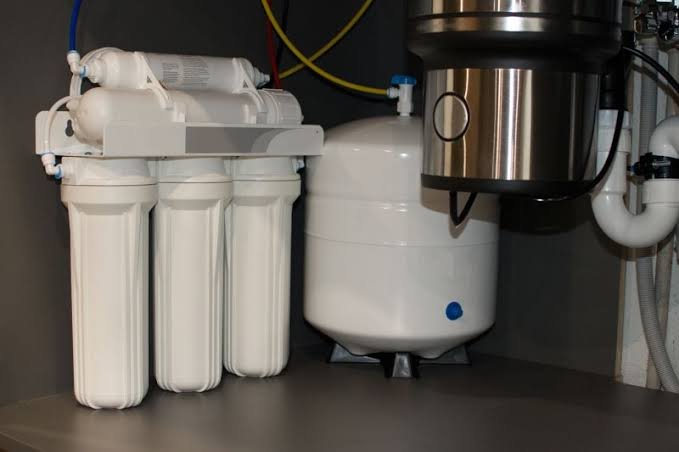
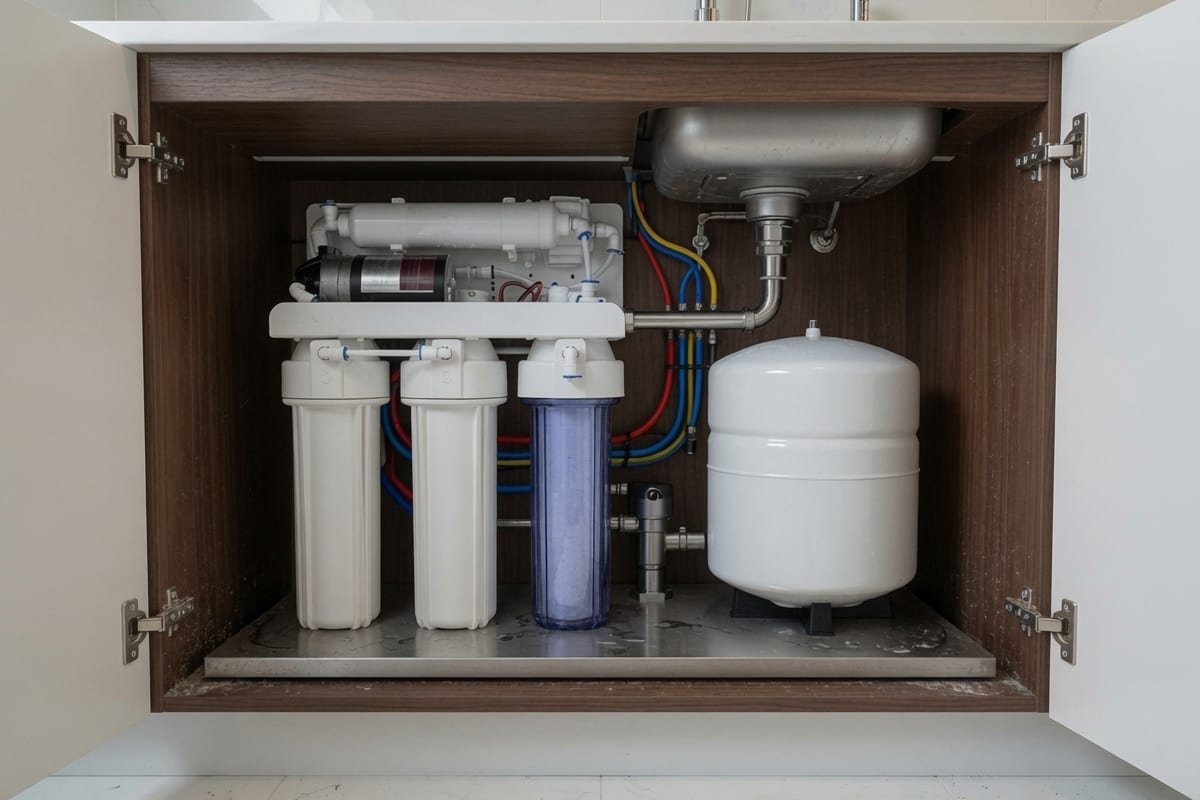
Well-designed reverse osmosis systems are often installed at a point of use, such as beneath the kitchen sink. This means the system treats the water intended for drinking and cooking rather than necessarily treating every gallon entering the house.
For many homes, that can be a practical compromise. You get targeted treatment where you need it without installing a large system for showers, toilets, and laundry.
The Membrane Is the Heart of the System
The membrane is the part that makes reverse osmosis different from conventional filtration, but it doesn’t work alone.
Most household systems use several stages. A sediment filter may protect the system from particles, while carbon filtration can help reduce chlorine and protect certain membrane materials. The reverse osmosis membrane then performs the primary separation step.
Some systems also include a post-filter to improve taste before water reaches the faucet.
The exact arrangement varies, which is why homeowners shouldn’t judge one system purely by the number of filter stages listed on the box. Five stages aren’t automatically better than four. What matters is whether the components are appropriate for the water being treated.
Testing Should Come Before Shopping
It’s tempting to search for the highest-rated system and call it a day.
But water quality isn’t identical from one home to another.
Municipal water and private well water can have very different characteristics. Even homes in the same neighborhood can experience different conditions because of plumbing, well construction, or other factors.
Water testing can identify characteristics such as hardness, pH, dissolved substances, and other concerns. Once you know what you’re dealing with, selecting equipment becomes much more straightforward.
In other words, don’t buy a solution before you’ve identified the problem.
What Makes a Good Reverse Osmosis Filter?
A reverse osmosis water filter should be evaluated on more than its purchase price.
Look at the membrane quality, replacement-filter availability, expected capacity, water-production rate, storage capacity if applicable, and installation requirements. The quality of replacement parts matters too. A system is only as practical as your ability to maintain it over the years.
Water pressure also deserves attention. Reverse osmosis depends on adequate pressure to move water through the membrane effectively. If household pressure is low, performance may suffer unless the system includes an appropriate solution.
Ask about these details before installation. A little research at the beginning can prevent plenty of frustration later.
Yes, Reverse Osmosis Uses Water
One point that often surprises new owners is that reverse osmosis can produce wastewater during the treatment process.
The amount varies depending on system design, membrane condition, water pressure, and other factors. Newer or more efficient systems can reduce waste compared with older designs.
This doesn’t automatically make reverse osmosis a poor choice. It simply means efficiency should be part of the conversation.
If water conservation is important to your household, ask about the system’s recovery rate and wastewater ratio rather than relying on vague claims about efficiency.
Don’t Forget the Storage Tank
Many traditional under-sink systems include a storage tank because the membrane produces treated water relatively slowly compared with how quickly people expect water to flow from a faucet.
The tank stores treated water so it’s available when you need it.
Tank size and household demand should be considered together. A small household may have no trouble keeping up, while a larger family could use treated water much more quickly.
Tankless reverse osmosis designs are also available and may offer different advantages in terms of space and water production. Again, there isn’t one perfect configuration for everyone.
Maintenance Is Not Optional
This is probably the least exciting part of owning a treatment system, but it’s one of the most important.
Pre-filters need replacement. Post-filters eventually need changing. The membrane has a longer service life but still requires periodic replacement depending on water conditions and usage.
If filters are ignored for too long, performance can decline and the system may no longer provide the expected results.
Set reminders based on the manufacturer’s recommendations and actual household usage. If the water’s taste changes, production slows, or the system begins making unusual sounds, investigate rather than assuming it will correct itself.
What About Hard Water?
Hard water can affect reverse osmosis equipment, particularly when mineral scale accumulates on components or reduces membrane performance.
If your incoming water is very hard, pretreatment may be worth considering. A suitable softening or conditioning approach can help protect downstream equipment depending on the specific water chemistry and system design.
This is another reason a whole-house and drinking-water strategy may sometimes work better together than relying on a single device.
Drinking Water Should Be Treated for a Reason
The phrase drinking water sounds simple, but households have different expectations.
Some people want better taste. Others have specific contaminants they’re trying to reduce. Someone using private well water may have concerns that don’t apply to a city water supply.
The goal should never be to remove everything simply because a product advertisement suggests that “more purification” is always better.
Water treatment should be targeted. If testing shows a concern, address it with technology designed for that concern. If testing doesn’t show a meaningful issue, there may be no reason to build an unnecessarily complicated setup.
A Small System Can Make a Big Difference
For many households, reverse osmosis makes sense because it focuses treatment where it matters most.
You don’t necessarily need to treat every gallon of water in the house to improve the water you drink. A properly installed point-of-use system can provide treated water for drinking, cooking, coffee, tea, and ice while leaving other household uses unchanged.
That focused approach can be practical, particularly when the main concern is water quality at the kitchen faucet.
Choosing With the Long Term in Mind
The best reverse osmosis system isn’t necessarily the cheapest one or the one with the longest list of features.
Consider how easy it will be to replace filters, whether replacement parts are readily available, how much space installation requires, how much water the system uses, and whether professional service is available when you need it.
A system that’s easy to maintain is often a better choice than one that looks impressive but becomes difficult to manage after installation.
Better Water Starts With a Sensible Plan
Reverse osmosis can be an excellent tool, but it works best when it’s part of a thoughtful water-quality plan.
Start by understanding your water. Test when appropriate. Identify the problem you’re actually trying to solve. Then choose equipment based on performance, maintenance, efficiency, and long-term practicality.
There’s no need to make water treatment more complicated than it has to be.
When the right system is matched to the right need, the result can be pleasantly simple: a reliable glass of water whenever you turn on the faucet, without having to wonder what you’re tasting. Sometimes that’s all a homeowner really wants.