Most people don’t think about the water in their home until it starts leaving evidence behind.
A glass comes out of the dishwasher covered in spots. The shower door looks cloudy five minutes after you’ve cleaned it. Your soap doesn’t seem to lather properly, and there’s a chalky ring around the kitchen faucet that keeps coming back no matter how often you scrub.
It’s easy to blame the cleaning products. Sometimes, though, the real issue is the water itself.
Hard water is extremely common, and for most households, the biggest frustration isn’t necessarily health-related. It’s the way mineral-rich water interacts with plumbing, appliances, soap, laundry, and everyday cleaning. Once you understand what’s happening, choosing an appropriate treatment becomes much less confusing.
What Makes Water “Hard”?
Water hardness comes primarily from naturally occurring calcium and magnesium. As groundwater moves through soil and rock, it can pick up these minerals along the way.
The concentration varies from one location to another. Some homes barely notice hardness, while others seem to fight mineral deposits constantly.
When hardness minerals are present at higher levels, they can react with soap and leave behind residue. Heated water can also encourage mineral deposits to form inside equipment.
That doesn’t mean hard water is automatically unsafe. In many cases, it’s simply a nuisance that becomes increasingly noticeable over time.
The important thing is knowing how hard your water actually is instead of assuming based on appearance alone.
The Signs Often Show Up in the Bathroom
The bathroom is usually where hard water becomes difficult to ignore.
Showerheads can develop white deposits. Faucets may become stiff or crusty around the edges. Shower glass can collect a cloudy film, and soap scum seems to appear almost magically.
You clean everything on Saturday, and by Wednesday you’re back at it.
That’s because wiping away the visible residue doesn’t change the mineral content of the water. As more water evaporates, the minerals can remain behind.
Some homeowners also notice that their skin feels dry after showering or that hair doesn’t feel quite the same. These experiences vary from person to person, so they shouldn’t be treated as a medical diagnosis, but they can be part of the overall picture of how hard water affects daily life.
Appliances Can Feel the Effects Too
Your washing machine and dishwasher aren’t exactly complaining out loud, but they can show signs of mineral-heavy water.
Hot-water appliances are particularly relevant because heating water can encourage minerals to precipitate and form deposits. Over time, those deposits can affect components and reduce efficiency.
Coffee makers, kettles, humidifiers, water heaters, and similar equipment may also develop mineral buildup.
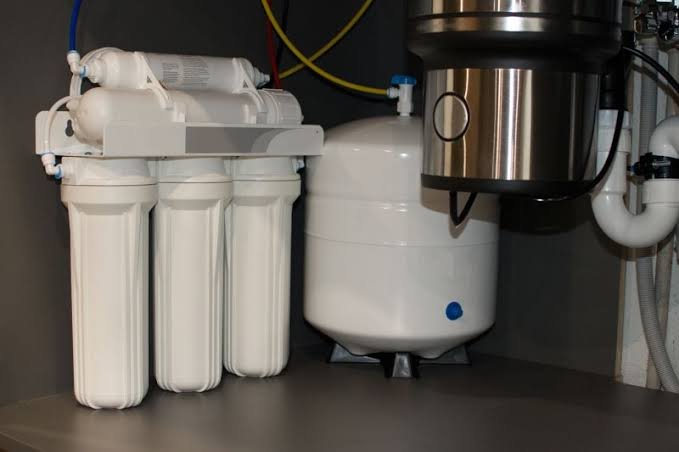
This is one reason homeowners sometimes consider water softeners. A properly selected softener can reduce the calcium and magnesium responsible for traditional water hardness, helping limit the formation of mineral deposits throughout the home.
However, a softener isn’t a universal water-treatment device. It isn’t designed to remove every contaminant, and it should be selected according to the household’s water conditions and usage.
Why Scale Buildup Keeps Coming Back
If you’ve ever cleaned a faucet only to see the same white crust return a few days later, you’ve experienced the stubborn nature of scale buildup.
Scale forms when minerals in water accumulate on surfaces, particularly where water is heated or allowed to evaporate. The severity depends on the hardness of the water, temperature, usage, and other conditions.
Over time, heavy scale can affect water-using equipment. It may also narrow passages in certain plumbing components or reduce the effectiveness of fixtures.
The solution isn’t necessarily to clean more aggressively. Cleaning removes existing deposits, while water treatment can address the mineral content that causes them.
That’s an important distinction. One deals with the symptom; the other may address the underlying cause.
Test Before You Treat
It can be tempting to walk into a store, see a water softener, and decide that it must be the answer.
A better approach is to test the water first.
Testing can help determine the actual hardness level and identify other characteristics that might influence treatment decisions. This matters because a home could have hardness along with iron, sediment, unusual pH, or other water-quality concerns.
If those additional issues exist, installing a softener alone may leave part of the problem untouched.
Testing also provides a useful baseline. If treatment is installed later, you can evaluate whether the system is producing the expected results.
A little information at the beginning can save a surprising amount of money at the other end.
Not Every Home Needs the Same System
Water treatment should be tailored to the household.
A small home with moderate hardness may have very different requirements from a large family using substantial amounts of water every day. Water consumption, peak flow, plumbing layout, available installation space, and maintenance preferences all matter.
There are also different types of softening technologies and configurations. Some systems use salt-based ion exchange, while other products use alternative approaches that may work differently and should not automatically be considered equivalent.
The best choice depends on what you’re trying to accomplish.
If the main goal is reducing traditional hardness, a conventional softener may make sense. If you’re dealing with several water-quality issues, additional treatment stages may be needed.
Don’t Ignore Water Pressure
It’s easy to focus on water chemistry and forget the practical side of plumbing.
Treatment equipment needs to handle the household’s flow requirements. An undersized system can struggle during periods of high demand, while clogged filters or poorly maintained components can restrict flow.
Think about the busiest time of day. Multiple showers, laundry, dishwashing, and faucets may all compete for water.
A properly sized system should be selected with these real-life situations in mind, not just an average daily water-use number.
Maintenance Makes a Difference
A water softener or filtration system doesn’t become maintenance-free just because it’s installed.
Depending on the equipment, homeowners may need to monitor salt levels, replace filters, clean components, check settings, or arrange periodic service.
Skipping maintenance can gradually affect performance. You may start noticing scale again or see changes in water flow.
The frustrating part is that problems often develop slowly, so they’re easy to ignore.
A simple maintenance calendar can help. Write down filter changes, service dates, and any unusual observations. It’s not exciting, but neither is paying for an avoidable repair.
Think Beyond the Initial Price
When comparing treatment systems, the purchase price is only part of the story.
Consider installation, replacement parts, electricity where applicable, salt or other consumables, routine service, and expected equipment life.
A cheaper system that requires frequent attention may cost more over several years than a slightly more expensive system that’s easier to maintain.
Also consider whether replacement parts are readily available. An impressive system isn’t much use if finding a basic component becomes an adventure.
The Goal Is Simpler Everyday Living
Treating hard water isn’t really about having sophisticated equipment in the basement. It’s about reducing the small frustrations that accumulate around the house.
Fewer deposits on fixtures. Easier cleaning. Better-performing appliances. Less time scraping mineral residue from surfaces.
Start with testing, understand your water, and choose treatment based on actual needs. Don’t assume the biggest system is automatically the best one.
When the setup is properly sized, installed, and maintained, you may barely think about it afterward.
And that’s probably the best compliment a water-treatment system can get: it quietly does its job while you get on with everything else.