Water is easy to take for granted. It comes out of the faucet when you need it, fills the washing machine, runs through the shower, and disappears down the drain. Most days, nobody gives it a second thought.
Then the little signs start showing up.
A glass comes out of the dishwasher with spots. The shower door develops a cloudy film. There’s sediment at the bottom of a pitcher, or perhaps the water has a taste you can’t quite describe. You clean the faucet, only to find the same residue a few days later.
These changes don’t necessarily mean there’s something seriously wrong with your water. But they are good reasons to pay closer attention. Understanding where water-quality problems come from, and what treatment can realistically accomplish, makes it much easier to choose the right solution.
Start With the Source
Before buying any treatment equipment, consider where your water comes from.
Municipal water goes through treatment and distribution systems, while private wells depend on local groundwater conditions. Those two sources can have very different characteristics. Even neighboring homes with similar water sources can experience different issues because plumbing, well conditions and household usage vary.
A water test is therefore one of the most useful first steps. It can provide information about hardness, pH, sediment and other characteristics that may influence the treatment approach.
Testing may sound like a chore, but it can save you from making an expensive guess.
What Whole-Home Filtration Actually Means
Many homeowners hear the term whole house water filters and assume it means the system will remove absolutely everything from their water.
That’s not how filtration works.
Different filters are designed for different purposes. Some focus on sediment. Others use carbon to reduce chlorine, taste or odor. Specialized filtration equipment can be designed around particular water-quality concerns.
“Whole house” generally describes where treatment occurs — typically at the point where water enters the home — rather than guaranteeing what the filter removes.
That distinction is worth remembering when comparing systems.
Look for the Problem Before Choosing the Solution
Suppose you have white scale around your faucets. That could point toward hard water.
Maybe the water smells unusual. That could require a completely different treatment approach.
Perhaps you’re seeing tiny particles in a glass. A sediment filter may be useful, but first you need to understand where the particles are coming from.
The goal is to match the equipment to the actual problem. Buying a system because it has the longest feature list isn’t necessarily a smart investment.
A good water-treatment recommendation should be based on testing, household conditions and clear treatment goals.
What Counts as Clean Water?
The phrase clean, safe water sounds simple, but water quality has several dimensions.
Water can look perfectly clear while containing dissolved substances you can’t see. On the other hand, a cloudy appearance doesn’t automatically mean the water is unsafe. Air bubbles, sediment and other harmless factors can sometimes affect appearance.
That’s why taste, smell and appearance shouldn’t be treated as complete safety tests.
If you’re concerned about a particular contaminant, test specifically for it. For private wells, regular testing is especially important because groundwater conditions can change over time.
Good treatment starts with evidence rather than assumptions.
Hard Water Is a Separate Concern
Hard water deserves its own conversation because it is frequently confused with filtration.
Hardness is primarily caused by calcium and magnesium. These minerals can create scale on faucets, shower doors, water heaters and appliances. They can also affect how soaps and detergents perform.
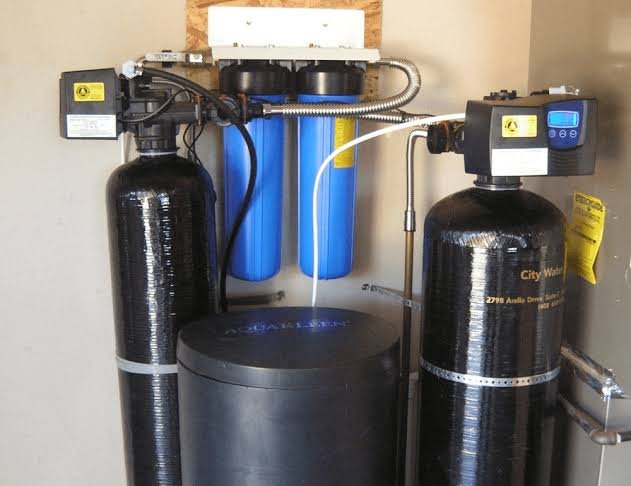
A water softener may be appropriate when hardness is the main concern. But a softener isn’t a universal filtration system, and it shouldn’t be marketed as one.
Some homes need softening. Some need filtration. Others may benefit from both.
Again, the water should decide.
Where Contaminants Come From
The term water contaminants covers a broad range of substances, and they don’t all come from the same place.
Some can occur naturally in groundwater. Others may be associated with agricultural activity, industrial processes, aging infrastructure or household plumbing.
Municipal water supplies are treated and monitored, but water can still be influenced by distribution systems and internal plumbing after it leaves the treatment facility.
Private well owners have an especially important role because they are responsible for monitoring their own water quality.
The appropriate response depends entirely on what’s present. A filter designed for one contaminant may have little effect on another.
Don’t Forget the Kitchen
For many families, the kitchen is where water quality matters most.
Drinking water, cooking, coffee, tea and food preparation all involve water, so taste and odor can become especially noticeable here.
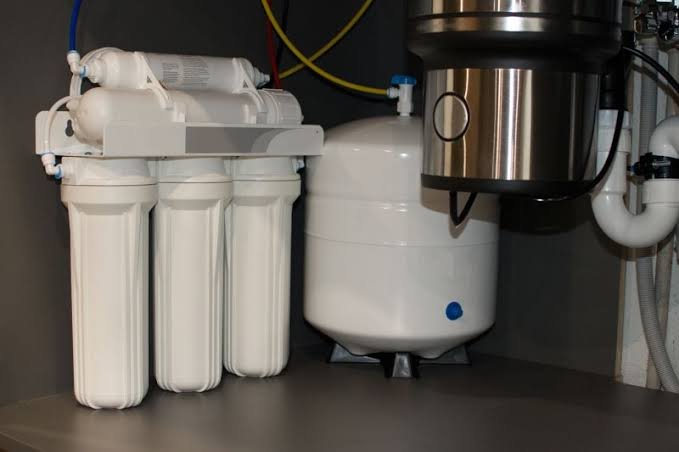
Some homeowners choose point-of-use filtration or purification for the kitchen rather than treating every gallon entering the property. This can be a practical option when the main concern is drinking-water quality rather than whole-home treatment.
If you choose this route, remember that replacement filters are part of the deal. A neglected filter can become less effective, so follow the manufacturer’s replacement recommendations.
Water Pressure Matters More Than You’d Expect
A filtration system has to accommodate the home’s water demand.
If the filter is too restrictive or poorly sized, you might notice reduced flow when several fixtures are operating at once. Imagine someone showering while the washing machine is filling and another person turns on the kitchen faucet.
That’s when a system’s real-world performance becomes obvious.
Before installation, consider household size, peak water demand, pipe dimensions and incoming pressure. Proper sizing helps ensure that treatment doesn’t come at the expense of everyday convenience.
Maintenance Keeps the System Useful
Water treatment equipment is not completely hands-off.
Filters need replacement. Valves and housings may need inspection. Some systems require periodic cleaning or professional service.
Ignoring maintenance can gradually reduce performance and make a system less useful than it was when installed.
Ask about maintenance before purchasing. Find out how frequently filters need changing and what the ongoing costs are. A treatment system should fit not only your water but also your lifestyle.
If you know you’re likely to forget routine maintenance, a complicated system may not be the best choice.
Don’t Over-Treat Your Home
More treatment isn’t automatically better.
If your only concern is moderate hardness, you may not need multiple filtration stages. If you’re concerned about a specific contaminant, you may not need equipment designed to address a dozen unrelated issues.
Over-treatment can add unnecessary cost, maintenance and complexity.
A sensible system focuses on measurable concerns and realistic household goals.
A Better Approach Starts With Knowing Your Water
There’s no universal water-treatment setup that works perfectly for every house.
The best choice depends on your water source, test results, household usage, plumbing and priorities. Once those factors are understood, the equipment decision becomes much clearer.
Pay attention to the little signs. Test when something changes. Ask questions before buying. And make sure any system you install is properly sized and maintained.
The goal isn’t to create some elaborate water-treatment masterpiece hidden in the garage.
It’s much simpler than that.
You want water that works well for your household, equipment that does what it’s supposed to do, and fewer everyday frustrations around the sink, shower and laundry room.
When treatment is chosen for the right reasons, that’s exactly what it can provide.