Most of us have a simple relationship with drinking water. Fill a glass, take a sip, refill it later. It’s such an ordinary part of the day that we rarely stop to think about where the water came from or what happened to it before reaching the kitchen faucet.
Then something changes.
Maybe the water has a faint chlorine taste. Perhaps there’s an odd smell after the tap hasn’t been used for a while. You might notice mineral spots around the faucet or simply decide that you would feel more comfortable with an additional layer of treatment.
That’s when choosing drinking water solutions starts to make sense. The important thing is not to buy a system just because it has an impressive list of features. Start with your water, your concerns, and the way your household actually uses it.
Clear Water Isn’t Always the Same as Good-Tasting Water
One of the interesting things about water is that appearance doesn’t tell the whole story. Water can look perfectly clear and still have a noticeable taste or odor.
Municipal water, for example, may contain disinfectants used to control harmful microorganisms. Natural minerals can also influence flavor. Plumbing materials, storage tanks, and the age of household pipes may contribute as well.
This doesn’t automatically mean there’s a serious safety problem. Taste and safety are separate questions, and it’s useful to keep them that way.
If you’re concerned, start by checking your local water-quality information and consider testing the water for specific concerns. Once you know what you’re dealing with, treatment becomes much less of a guessing game.
What Do You Actually Want to Improve?
Before choosing filtration equipment, ask yourself a fairly simple question: what bothers you about the water?
Maybe it tastes strange. Maybe you don’t like the smell. Perhaps you want to reduce a particular contaminant identified by testing. Or maybe you just want water that feels more pleasant to drink every day.
These goals can require different technologies.
A carbon filter may be useful for certain taste and odor concerns, while reverse osmosis can address a broader range of dissolved substances. Other filtration methods are designed for sediment or specific contaminants.
There’s no single filter that does everything perfectly. That’s why defining the problem first is so important.
A Cleaner Glass Can Change the Whole Experience
Water doesn’t need to taste dramatically bad for people to drink less of it. Sometimes a subtle off-taste is enough to make someone reach for a soft drink, juice, or another beverage instead.
Good filtration can make drinking water more appealing by improving characteristics that people notice immediately.
For many households, the goal is simply cleaner, clearer drinking water that tastes fresh and feels dependable. That can be especially useful for families who fill reusable bottles throughout the day or rely heavily on filtered water for cooking, tea, and coffee.
Still, “cleaner” shouldn’t be treated as a vague marketing promise. Ask what a system is designed to reduce and whether the technology has been independently tested or certified for those claims where applicable.
Specific information is far more useful than a glossy brochure.
Reverse Osmosis Is Powerful, but It Isn’t Magic
Reverse osmosis has become a popular choice for homeowners who want extensive treatment at the kitchen sink.
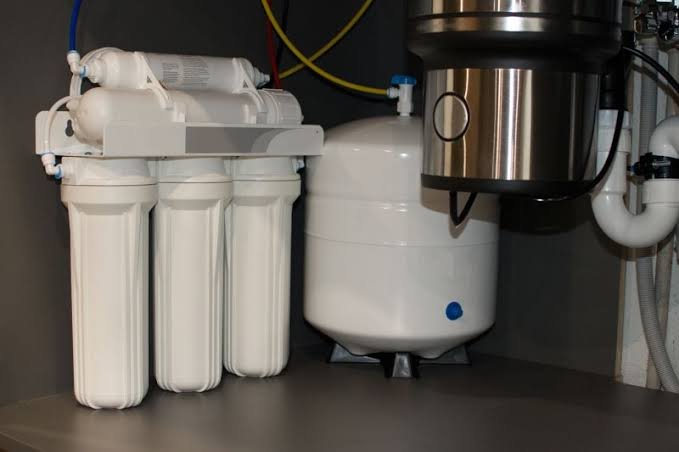
An reverse osmosis system uses pressure to move water through a semipermeable membrane. The membrane allows water molecules to pass while rejecting many dissolved substances. Most residential systems also use additional pre- and post-treatment stages to support performance and improve taste.
The technology can be highly effective, but it comes with trade-offs. RO systems typically produce some wastewater, require filter and membrane changes, and need adequate water pressure to operate properly.
They also aren’t necessarily needed for every household.
If your main concern is chlorine taste, for example, a properly selected carbon filter may be a simpler option.
Point-of-Use Filtration Can Be Convenient
Many homeowners don’t need to treat every gallon of water entering the house.
If drinking and cooking are your main priorities, a point-of-use system can focus treatment at the kitchen sink. This approach can be practical because you’re treating the water where it matters most to you.
Under-sink systems are generally hidden from view and can provide treated water through a dedicated faucet. Countertop options may work well for renters or households that don’t want to modify plumbing.
The best choice depends on your space, budget, water quality, and how much water your household consumes.
Convenience matters, too. A system that is technically excellent but difficult to maintain may eventually become an expensive cupboard decoration.
Whole-Home and Drinking-Water Treatment Serve Different Purposes
It’s easy to confuse whole-home filtration with drinking-water purification.
They’re not necessarily interchangeable.
Whole-home systems treat water as it enters the property and can be useful when the goal is to improve water quality throughout the house. A dedicated drinking-water system focuses on water consumed at a particular point.
Some homes benefit from both. For example, whole-home filtration might address sediment or general water-quality concerns, while an under-sink RO system provides additional treatment for drinking and cooking.
The important thing is to avoid treating everything simply because you can. More equipment means more installation, maintenance, and ongoing costs.
Don’t Forget the Filters
A drinking-water system is only as good as its maintenance routine.
Filters eventually become loaded with the material they’re designed to capture. RO membranes also have a service life. If replacements are delayed too long, water quality and flow can suffer.
Follow the manufacturer’s recommended replacement schedule, while also paying attention to changes in taste, odor, flow rate, or system performance.
Keep a simple record of when filters were installed. It takes almost no effort and saves you from trying to remember whether that cartridge was changed three months ago or, somehow, two years ago.
Water Testing Can Prevent an Expensive Mistake
Testing is especially important if you have a specific concern.
Instead of assuming your water contains a particular contaminant, test for it when appropriate. A professional can help interpret results and recommend treatment based on actual conditions.
This can prevent the common mistake of buying equipment because someone online said it worked for their home.
Their water isn’t your water.
Even homes in the same neighborhood can have different plumbing, sources, or treatment needs. A test gives you a more reliable starting point.
Think About the Long-Term Cost
The purchase price is only part of owning a filtration system.
Consider replacement filters, membranes, electricity where applicable, water usage, servicing, and installation. Ask how often parts need attention and whether replacements are readily available.
A cheaper system isn’t necessarily cheaper over five years. Likewise, an expensive system isn’t automatically the best investment.
Look at the complete picture.
If you can estimate the annual operating cost before buying, you’ll have a much clearer idea of what you’re signing up for.
Make Drinking Water Easy
The best water-treatment system is often the one your household actually uses consistently.
It should fit the available space, provide enough treated water for your needs, and be simple enough to maintain. If you’re constantly fighting with complicated controls or forgetting expensive replacement parts, the system isn’t serving you very well.
Start with the water. Identify what you want to change. Then compare treatment technologies based on those specific goals.
There’s no need to chase every new filtration gadget that appears on the market. Sometimes a straightforward system, properly selected and maintained, does the job beautifully.
At the end of the day, better drinking water isn’t about owning the most advanced equipment. It’s about confidence in what’s coming from your tap, a taste you actually enjoy, and a system that quietly does its job without becoming another thing on your household to-do list.