Water is easy to overlook in a commercial setting. Employees wash their hands, kitchens run dishwashers, guests take showers, equipment uses heated water, and customers fill glasses without giving the plumbing much thought. Most of the time, that’s exactly how it should be.
But behind the scenes, water quality can have a surprisingly large effect on a business.
Mineral buildup can affect equipment. Sediment can clog components. Unpleasant taste or odor can make customers notice something they probably shouldn’t have to notice. And in industries that depend heavily on water, even a small treatment problem can become an operational headache.
A good commercial water treatment plan isn’t about buying the biggest system available. It’s about understanding the water, understanding how the building uses it, and choosing equipment that can keep up.
Every Business Has Different Water Needs
An office building and a restaurant may occupy similar amounts of space, yet their water demands can be completely different. A hotel has another set of challenges, while a manufacturing facility may have highly specific water-quality requirements tied directly to production.
That makes customization important.
Before choosing equipment, property managers should look at water consumption, peak demand, incoming water quality and the applications that depend on it. Testing can reveal hardness, sediment, dissolved minerals and other characteristics that influence treatment decisions.
It’s much easier to choose equipment when you know what problem you’re actually trying to solve.
Managing Hard Water in a Busy Facility
Hard water contains minerals such as calcium and magnesium. While these minerals aren’t generally considered a health concern, they can cause practical problems in commercial buildings.
Scale may develop inside water heaters, boilers, dishwashers and other equipment. Faucets can develop white deposits, while cleaning staff may spend more time dealing with mineral residue.
For properties where hardness is a significant issue, commercial water softeners can help reduce calcium and magnesium before the water reaches equipment and fixtures.
Sizing is critical, though. Commercial systems need to account for flow rates and periods of peak demand. A unit that works for a small office may be completely inadequate for a busy restaurant or hotel.
When Drinking Water Needs More Attention
Many businesses provide drinking water to employees, customers or guests. In those situations, taste and dissolved contaminants may become more important than hardness alone.
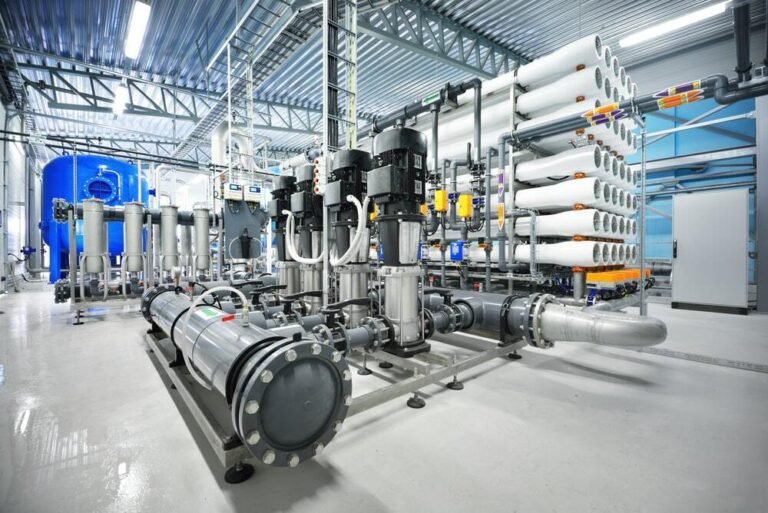
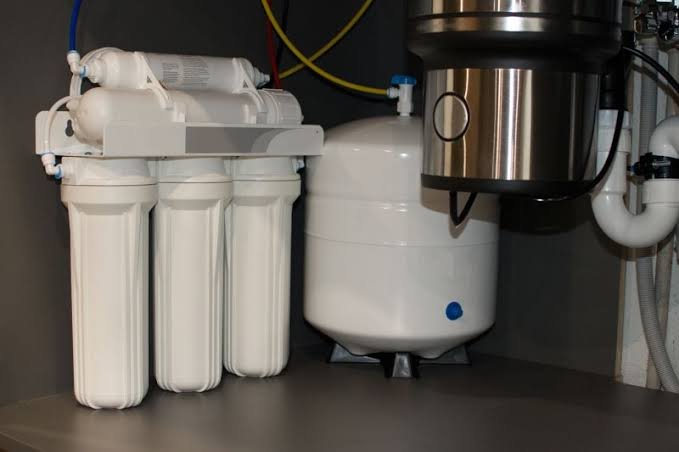
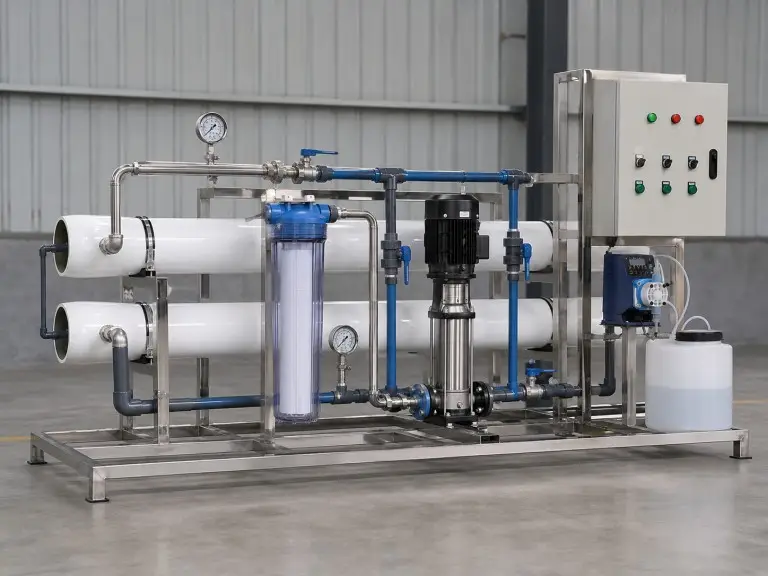
Reverse osmosis can be useful for applications that require a higher level of purification. Commercial RO filtration uses pressure to push water through a semipermeable membrane, reducing many dissolved substances.
It can be especially useful in restaurants, cafés, healthcare environments, offices and other settings where water quality affects drinking water, food preparation or specialized equipment.
However, reverse osmosis isn’t a universal solution. Pretreatment may be necessary, and the system must be sized according to water demand. Membranes and filters also require regular maintenance.
Filtering Sediment and Improving Taste
Not every water problem requires a sophisticated purification system. Sometimes the main concern is sediment, chlorine taste, odor or particles entering the building.
Commercial water filters can address specific concerns depending on their design and filter media. Sediment filters can capture particles, while carbon-based filtration is commonly used to improve taste and odor.
The important thing is selecting the right filter for the job. A filter designed for sediment isn’t necessarily appropriate for dissolved contaminants, and a carbon filter won’t solve every water-quality issue.
This is where water testing becomes useful again. The more clearly you understand the incoming supply, the easier it is to choose appropriate filtration.
Peak Demand Changes Everything
One of the biggest differences between residential and commercial treatment is water demand.
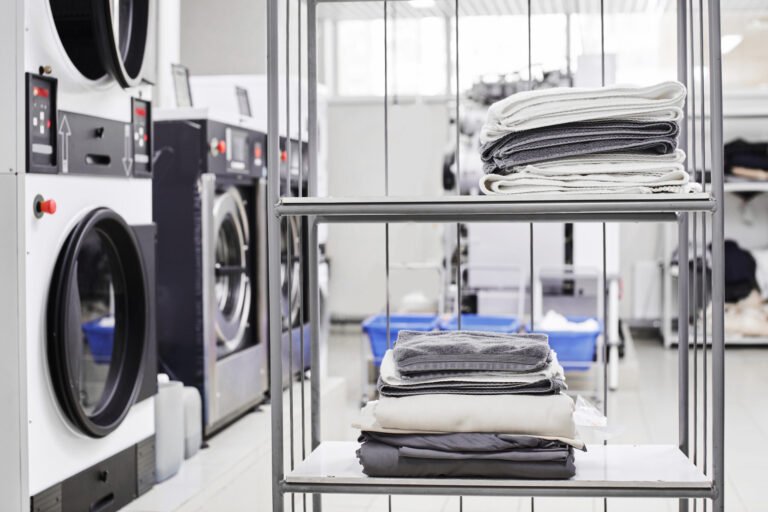
A household may use water throughout the day in relatively predictable patterns. A restaurant can experience a surge during lunch or dinner. A hotel can see demand rise dramatically in the morning. A manufacturing operation may have specific periods when water consumption jumps.
Treatment systems need to handle those peaks without causing pressure problems or reducing performance.
That means flow rate should be considered alongside total daily water usage. A system that technically treats enough gallons but cannot keep up with the required flow may create problems when the building is busiest.
Protecting Expensive Equipment
Water treatment can sometimes seem like another operating expense, but it can also be viewed as equipment protection.
Scale, sediment and certain water characteristics can affect boilers, water heaters, ice machines, dishwashers and other expensive assets. When treatment reduces those problems, businesses may spend less time dealing with preventable maintenance issues.
It isn’t a guarantee against breakdowns, of course. Equipment still ages. Parts still fail. But controlling water conditions can be one useful part of a larger maintenance strategy.
For businesses where downtime is costly, prevention can be worth serious consideration.
Maintenance Needs to Be Planned
Installing treatment equipment is only the beginning.
Filters need to be replaced. Reverse osmosis membranes eventually require service. Softener systems need appropriate regeneration and media management. Valves, pumps and connections should also be inspected periodically.
Commercial properties should have a clear maintenance schedule rather than waiting for water quality to deteriorate.
Keeping records can help. Note when filters were changed, when service was performed and whether any unusual water-quality complaints were reported. Over time, those records can reveal patterns that aren’t obvious from a single inspection.
Don’t Ignore Water Pressure
Treatment equipment changes the way water moves through a building, so pressure deserves attention.
If filters become clogged, flow can drop. Poorly sized equipment may restrict water during peak demand. Pumps may be required in buildings where pressure or elevation creates additional challenges.
A commercial system should therefore be evaluated as part of the building’s overall plumbing setup rather than as a standalone piece of equipment.
The goal isn’t simply to treat water. It’s to treat it while maintaining dependable service throughout the property.
Look Beyond the Initial Price
A low purchase price can be tempting, especially when budgets are tight. But commercial water treatment should be evaluated over its expected operating life.
Consider replacement filters, energy use, water waste, salt or media requirements, maintenance labor and service availability. A system that costs less upfront may become more expensive if it requires frequent attention or doesn’t perform well under heavy demand.
Likewise, an expensive system isn’t automatically the best choice. The equipment should earn its place through performance and practicality.
A Good System Should Make Business Easier
The best commercial water treatment plan is one you don’t have to think about constantly.
It should provide reliable performance during busy periods, protect equipment where appropriate, support the quality of water used by employees and customers, and remain manageable from a maintenance standpoint.
That starts with understanding the water instead of jumping straight to equipment. Test the supply. Identify the important problems. Look at how water moves through the building. Consider peak demand and future growth.
Then choose treatment around those facts.
Water may be only one part of running a business, but it touches far more operations than most people realize. A thoughtful treatment strategy can help keep those operations moving quietly in the background — which, for a busy commercial property, is exactly what you want.