Water problems don’t always announce themselves. Sometimes they’re obvious, like a reddish stain around the bathroom drain. Other times, the clues are much quieter—a film on the shower door, spots on clean glasses, dry-feeling skin, or a metallic taste that wasn’t there a few months ago.
For homeowners, figuring out what’s happening can be frustrating. There are plenty of treatment products available, but choosing one without understanding the underlying issue can lead to wasted money and disappointing results.
Hardness, iron, and rust are common concerns, but they’re not the same thing. Each behaves differently in water and may require a different treatment approach. Once you understand the distinction, the whole subject becomes less mysterious.
Start With What You’re Actually Seeing
Your home’s fixtures can provide useful clues.
White or chalky deposits often point toward mineral buildup associated with hard water. Orange or reddish stains may suggest iron. A metallic smell or taste can be another indication that something deserves a closer look.
But visual clues aren’t enough to make a treatment decision.
Water can contain substances that aren’t visible at all. That’s why testing is usually a better starting point than simply buying equipment based on what the water looks like.
A proper assessment can help determine whether you need softening, filtration, iron removal, or some combination of treatment technologies.
What Hard Water Really Means
hard water is water containing relatively high concentrations of calcium and magnesium.
These minerals occur naturally and aren’t necessarily something you can see floating in the glass. The trouble often becomes apparent when the water interacts with plumbing, fixtures, soap, and appliances.
Mineral deposits can collect around faucets and showerheads. Glassware may develop cloudy spots. Soap can feel more difficult to rinse away, and some households find themselves cleaning bathroom surfaces more frequently.
Over time, scale can also develop inside water-using appliances.
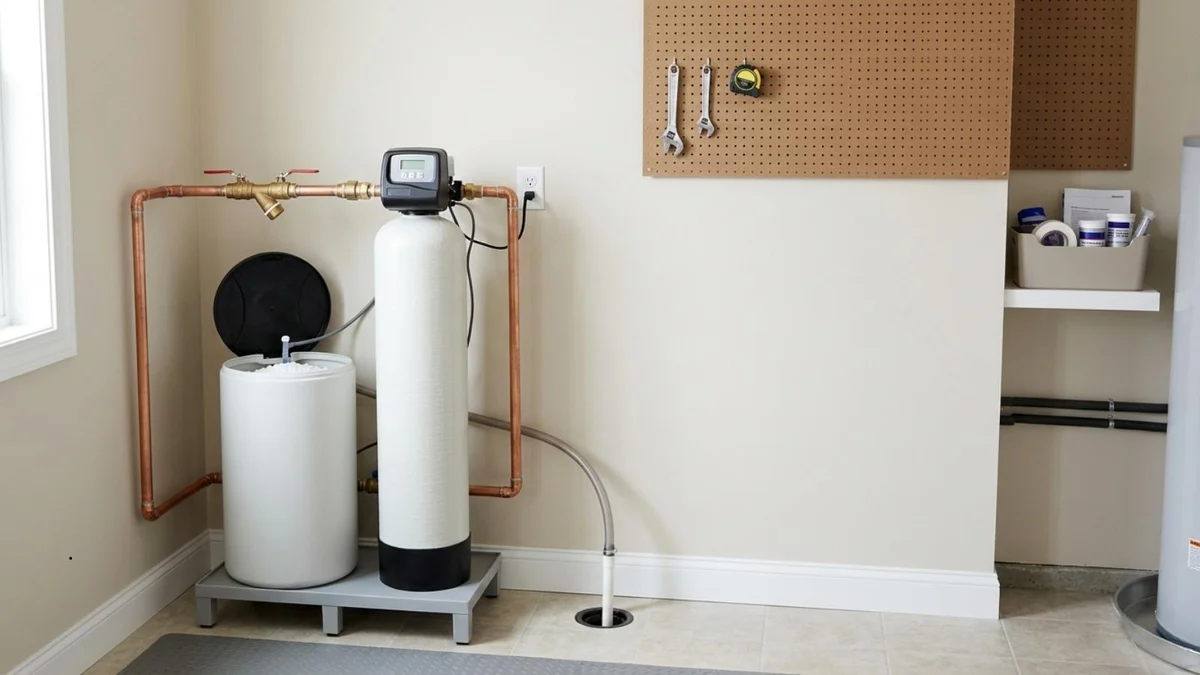
A water softener is commonly used to reduce hardness. Traditional systems use ion exchange, replacing hardness minerals with sodium or potassium ions. The result is water that’s less likely to form the familiar mineral scale associated with hard water.
Water Softener Systems Have a Specific Job
A softener can be an excellent solution when hardness is the main issue.
Modern water softener systems come in different sizes and configurations, so selecting the right one requires some thought. Household size, water consumption, hardness level, and peak demand can all influence the appropriate capacity.
An undersized system may struggle to keep up with a busy household. An oversized system may cost more than necessary and use more resources without providing meaningful additional benefits.
It’s also important to understand that softening isn’t the same as filtering.
A softener is primarily intended to address hardness. It isn’t automatically designed to remove sediment, iron, chlorine, or every other substance that might be present in water.
That distinction is easy to miss, especially when shopping for the first time.
Iron Can Create a Different Set of Problems
Iron in water can be particularly noticeable.
Depending on its form and concentration, iron may cause orange, brown, or reddish staining on fixtures, sinks, toilets, and laundry. Water can sometimes develop a metallic taste or smell, too.
The challenge is that not all iron behaves in exactly the same way.
Some iron is dissolved and may not be visible when water first comes out of the faucet. Once exposed to oxygen, however, it can oxidize and create visible particles or staining.
That means the appropriate treatment depends on the type and concentration of iron involved.
Simply installing a standard sediment filter may not solve a dissolved-iron problem. Likewise, a regular softener isn’t always the best standalone answer when iron levels are significant.
Understanding Iron & Rust
Homeowners often use the words interchangeably, but iron & rust aren’t exactly the same thing.
Rust is essentially the result of iron reacting with oxygen and moisture. In water-treatment situations, the distinction matters because iron can exist in different forms before it creates the familiar reddish-brown residue.
This is why a proper water analysis can be so helpful.
If iron is responsible for staining, the treatment system should be selected according to the actual iron chemistry and concentration. Depending on the situation, treatment may involve oxidation, filtration, specialized media, or another method.
The goal isn’t simply to remove whatever looks unpleasant. It’s to address the underlying form of the iron effectively.
Why One Filter May Not Solve Everything
It’s tempting to look for one system that handles every water problem.
Sometimes a combination of treatment methods is more practical.
For example, a home might have hard water plus iron. In that situation, treatment may need to address both concerns separately. Pretreatment could also be important if one system needs protection from another water characteristic.
This is where professional evaluation becomes useful. A good recommendation should be based on testing and actual household needs, not a generic package.
More equipment isn’t necessarily better. The right combination is what matters.
Consider Your Appliances
Water treatment isn’t just about how the water feels in the shower.
Water conditions can affect appliances that use water regularly. Mineral scale may accumulate in water heaters, dishwashers, washing machines, coffee makers, and other equipment.
Iron can also create staining and deposits that are difficult to remove once they become established.
Reducing these problems can make routine cleaning easier and may help protect equipment from the effects of mineral buildup.
That doesn’t mean treatment will make every appliance last forever. Appliances still age, parts still wear out, and maintenance still matters. But addressing problematic water conditions can remove one source of unnecessary stress.
Don’t Ignore the Plumbing
Sometimes the source of a water problem isn’t the water source itself.
Older plumbing, corroded components, or localized issues can affect what comes out of a particular faucet. If discoloration appears only at one fixture, for instance, it may be worth investigating the plumbing before investing in a whole-house treatment system.
On the other hand, if the same problem appears throughout the property, the water source deserves closer attention.
Paying attention to where and when the problem occurs can provide valuable information.
Test Before You Treat
This is probably the most useful advice for anyone dealing with uncertain water conditions.
Don’t choose equipment based solely on a stain, taste, or internet search.
Testing can identify hardness, iron, pH, and other relevant characteristics. Once you know the numbers, you can compare treatment options with much greater confidence.
Testing can also prevent over-treatment. If a particular concern isn’t present, there’s little reason to spend money addressing it.
A thoughtful water-treatment plan starts with evidence.
Maintenance Still Matters
Even the correct treatment system needs regular care.
Filters require replacement. Softener salt needs replenishing. Iron-removal systems may need periodic servicing or media maintenance. Settings can also require adjustment as water usage changes.
Keep an eye on the warning signs.
If staining returns, water pressure drops, or the taste changes, don’t immediately assume the equipment has reached the end of its life. A clogged filter or maintenance issue may be the real culprit.
Routine service is usually easier than emergency repair.
Choosing the Right Solution
Water treatment doesn’t have to be complicated, but it does require a little patience.
Start by identifying the symptoms. Test the water. Understand whether you’re dealing with hardness, iron, rust-related staining, sediment, or another concern. Then select technology designed specifically for those conditions.
A properly sized softener can be valuable for homes with significant hardness. Specialized treatment may be more appropriate when iron is the main concern. In some cases, a combination makes sense.
The important thing is to avoid guessing.
Your water has its own characteristics, and your home has its own needs. When treatment is based on those facts rather than assumptions, the result is usually more effective—and much easier to live with.
Good water treatment isn’t about making the water “perfect.” It’s about making it work better for your household, your fixtures, and your everyday routine. Sometimes that’s all you really need.