Introduction
Two people can start the exact same business, with the exact same resources, and end up with completely different outcomes. Often, the difference isn’t skill or luck — it’s mindset. An entrepreneur mindset shapes how you react to failure, make decisions under uncertainty, and keep going when things don’t work the first, second, or tenth time. It’s not something you’re born with; it’s built through habits and repeated practice. This guide breaks down exactly what that mindset looks like and how to build it deliberately, even if you’re just starting out.
What Defines a True Entrepreneur Mindset
An entrepreneur mindset isn’t about being fearless or endlessly optimistic — it’s about being comfortable with uncertainty while still moving forward with structured decisions.
Quick answer: An entrepreneur mindset is the ability to make decisions under uncertainty, learn quickly from failure, and stay focused on long-term goals despite short-term setbacks.
It combines curiosity (constantly questioning assumptions), resilience (recovering from setbacks quickly), and discipline (following through even when motivation dips).
Embracing Calculated Risk-Taking
Entrepreneurs aren’t reckless — they take calculated risks based on available information, not blind leaps of faith. The key skill is distinguishing a risk worth taking from one that’s simply gambling.
Before taking a major risk, ask:
- What’s the worst realistic outcome, and can I survive it?
- What data or evidence supports this decision?
- What’s the smallest version of this risk I can test first?
A founder considering a big inventory order, for instance, might first test demand with a small batch before committing capital to a bulk order — reducing the downside while still moving forward.
Developing Resilience Through Failure
Failure is inevitable in entrepreneurship — the mindset difference is in how quickly you recover and what you extract from it.
[link to related guide on common startup mistakes here]
Instead of asking “why did this fail,” reframe it as “what specifically would I do differently next time” — this shifts focus from blame to actionable learning, which is what actually compounds into better decisions over time.
Building Decision-Making Confidence
Many aspiring entrepreneurs get stuck in analysis paralysis, waiting for perfect information that never arrives. Building confidence means learning to decide with 70-80% of the information, rather than waiting for 100%.
- Set a deadline for every major decision, even a small one
- List the top 3 factors that actually matter for this decision
- Make the call, and track the outcome to improve future judgment
- Avoid revisiting decided matters unless new information genuinely changes things
Cultivating a Learning-Obsessed Habit
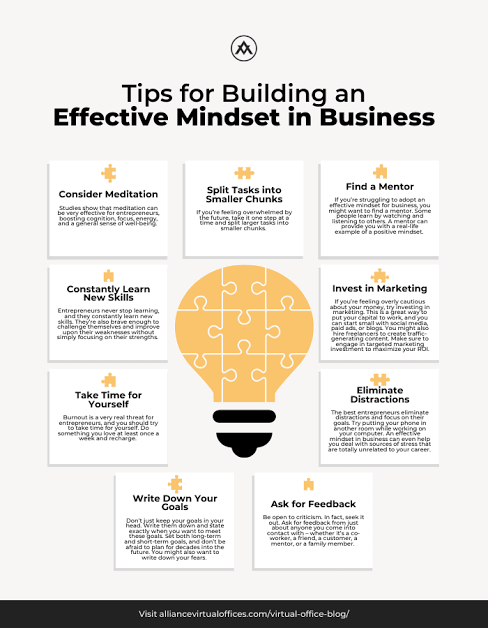
Successful entrepreneurs treat learning as a continuous, non-negotiable habit — not something reserved for a crisis.
Quick answer: An entrepreneur mindset treats constant learning — from books, mentors, competitors, and customer feedback — as a core daily habit rather than an occasional activity.
This can be as simple as reading one industry report a week, having a monthly call with a mentor, or reviewing customer feedback every Friday without fail.
Managing Emotional Highs and Lows
The entrepreneurial journey is emotionally volatile — a big client win one week, a key employee resigning the next. Developing emotional regulation prevents overreacting to either extreme.
Practical habits that help:
- Journaling weekly to track patterns in decisions and emotions
- Having a peer group of other founders to reality-check reactions
- Separating “urgent” from “important” before reacting to bad news
Staying Focused on Long-Term Vision
It’s easy to get pulled into every shiny opportunity or short-term fire. An entrepreneur mindset requires filtering decisions through a long-term lens, even when short-term pressure says otherwise.
A useful practice is reviewing your core 1-year goals monthly and asking whether current daily activities are actually moving you toward them, or just keeping you busy.
Building Self-Discipline Without Burnout
Discipline doesn’t mean working endless hours — it means consistency on the few things that matter most, while protecting energy for the long run.
- Block time for deep, high-value work before checking email or messages
- Set a hard stop time most days to avoid chronic burnout
- Review weekly what actually moved the business forward, versus what just felt busy
FAQ
Can an entrepreneur mindset be learned, or is it innate? It can absolutely be learned through deliberate practice — habits like reframing failure and structured decision-making build this mindset over time, regardless of natural personality.
How do I stay motivated when a business isn’t growing fast? Focus on process metrics you control, like customer conversations or product improvements, rather than only outcome metrics like revenue, which can lag behind effort.
Is risk-taking necessary to have an entrepreneur mindset? Yes, but it should be calculated risk based on evidence and testing, not reckless decision-making without any research or validation.
How important is failure in developing this mindset? Very important — most experienced entrepreneurs point to early failures as the source of their sharpest lessons, provided they actively reflect on what went wrong.
Does an entrepreneur mindset apply outside of starting a business? Yes, the same skills — resilience, decision-making under uncertainty, and continuous learning — apply well to careers, leadership roles, and personal projects too.
How can I develop this mindset if I’m still employed full-time? Start applying these habits to smaller decisions and side projects now — testing ideas, learning from small setbacks, and practicing structured decisions builds the muscle before you go all-in.
Conclusion
Building an entrepreneur mindset isn’t a one-time realization — it’s a set of habits practiced consistently: calculated risk-taking, quick recovery from failure, disciplined decision-making, and staying anchored to long-term goals. None of this requires natural fearlessness, just deliberate practice over time. Pick one habit from this guide — journaling your decisions, or setting a weekly learning ritual — and start this week, rather than waiting to “feel ready” to think like an entrepreneur.